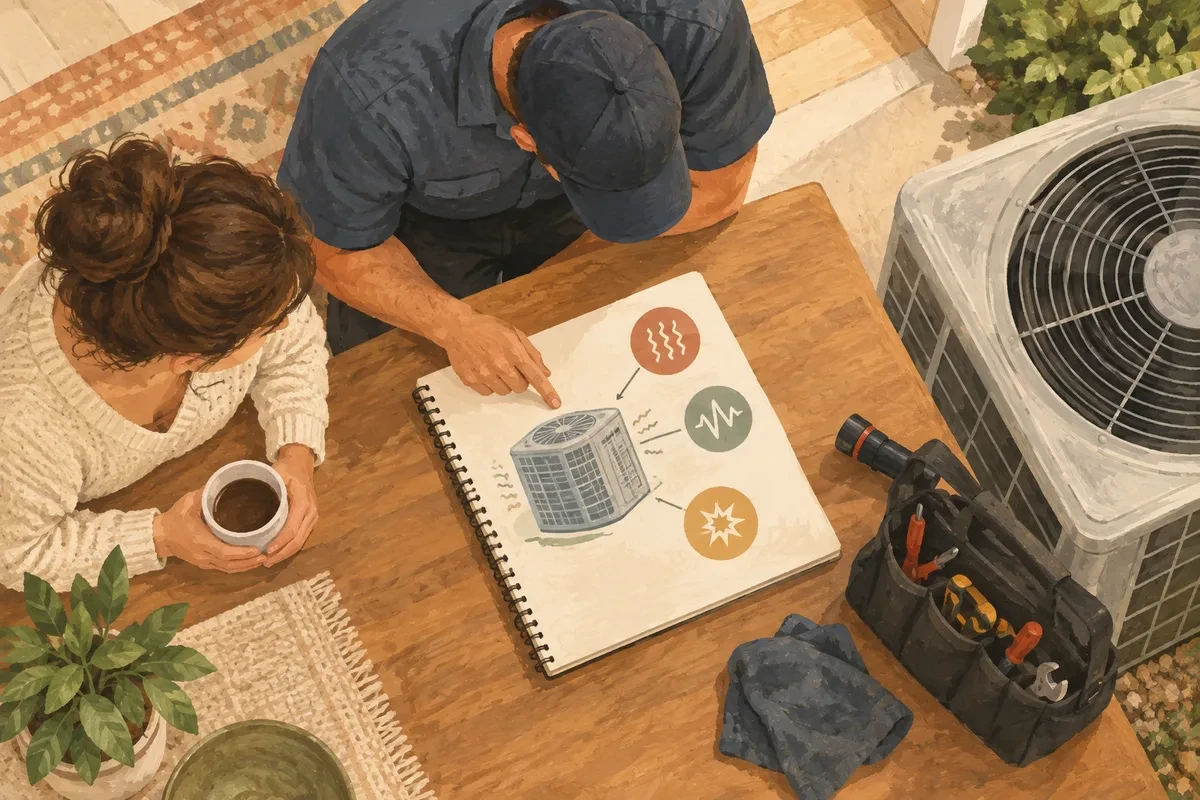
What That Rattle, Hum, or Bang From Your System Might Mean
Your heating and cooling system talks to you more often than you might think. Most of the time, it hums along quietly in the background. But when it starts rattling, buzzing, or banging, that's its way of telling you something has changed.
Not every noise means trouble right away, and not every noise can wait either. Learning to tell the difference can help you decide whether to keep an eye on things or pick up the phone. Here's a general guide to some of the most common sounds homeowners in Raleigh hear from their systems, and what they might be pointing to.
Rattling and Clanking
A rattle often points to something loose. This could be a panel on the outdoor unit that has worked itself free, a screw that has vibrated loose over time, or debris like a stick or acorn that has found its way inside. Loose panels are usually a lower urgency issue, but they can lead to bigger problems if left alone, since a rattling part can wear against other components.
Clanking that sounds more metallic and rhythmic can mean a fan blade is bent or hitting something as it spins, or a part inside the unit has come loose from its mounting. This type of noise is worth having checked sooner rather than later, since a damaged blade can affect airflow and put extra strain on the motor.
Humming or Buzzing
A soft, steady hum is often just the normal sound of a compressor or fan motor running. But a louder buzz, especially one that is new, can mean something different. Electrical issues, like a failing capacitor or loose wiring connection, often show up as a buzzing sound near the outdoor unit or the indoor air handler.
Buzzing can also happen when refrigerant lines vibrate against the cabinet or when a fan blade is slightly out of balance. Because electrical concerns can sometimes escalate, a persistent buzz is one of those sounds worth having looked at soon rather than waiting it out.
Banging or Popping
A single bang when your furnace kicks on can be startling, but it usually has an explainable cause. It often happens when built-up dust or debris in the burner area ignites all at once instead of lighting smoothly. This is one to have a technician look at, since it can point to a burner that needs attention.
Metal ducts also naturally expand and contract as air temperature changes, which can create a popping or banging sound as the metal shifts. This is usually harmless, but if the banging is loud, frequent, or seems to be getting worse, it's worth mentioning to a professional so they can rule out anything more serious.
Squealing or Screeching
High-pitched squealing is one of the sounds that tends to get people's attention fastest, and for good reason. It often points to a belt that has slipped out of position or a motor bearing that is wearing down and needs lubrication or replacement. These parts don't usually fail without warning, so a squeal is your system's early alert.
Screeching that sounds sharper or more constant can sometimes mean a blower wheel is rubbing against its housing. Either way, this category of noise generally deserves prompt attention, since motor and bearing issues tend to get more involved the longer they run unaddressed.
When It's Time to Call
Some noises are easy to shrug off, especially if your system still seems to be heating or cooling your home just fine. But sounds that are new, getting louder, or happening more often are usually your system's way of asking for a closer look before a small issue turns into a bigger one.
If you're hearing something odd from your furnace, heat pump, or air conditioner and aren't sure what it means, the team at Blue Heron Heating & Air in Raleigh is glad to help you figure it out. We also work with duct systems, so if the noise seems to be coming from inside your walls or ceiling rather than the unit itself, that's worth mentioning too.
Every home and every system is a little different, so the best next step is usually a conversation about what you're hearing and when it happens. Give us a call with your questions, and we'll help you understand what your system might be trying to tell you.
Questions about your own situation? The team at Blue Heron Heating & Air is happy to help — call us at (919) 555-0164 or request an appointment.
This article is for general information only.