The Humble Air Filter: When and Why to Change It
It's easy to forget about the air filter tucked away in your heating and cooling system. It doesn't make noise, it doesn't have a thermostat, and most of the time it's hidden behind a metal grille or inside a slot you rarely open. But this simple, unassuming part plays a bigger role in your home's comfort than most people realize.
A clean filter helps your system breathe easier, keeps dust and debris out of sensitive parts, and has a real say in the quality of the air you and your family breathe every day. In this post, we'll walk through what filters actually do, how often you should be swapping them out, and how to choose one that fits your home and your system.
What the Filter Is Really Doing in There
Every time your furnace or air conditioner runs, it pulls air from your home, moves it across a coil or heat exchanger, and pushes it back out through your ducts. The filter sits in that airflow path and catches dust, pet hair, lint, and other particles before they can reach the inner workings of your system.
This matters for two reasons. First, it protects your equipment. Build-up on coils and blower components makes your system work harder to move the same amount of air, which can shorten its working life and drive up energy use. Second, it affects the air circulating through your rooms. A filter that's doing its job well helps reduce the amount of dust and airborne particles settling on your furniture, floors, and yes, your lungs.
In other words, this small cardboard-and-fiber square is doing double duty every single day, quietly protecting your equipment while shaping the air quality inside your home.
How Often Should You Actually Change It
There's no single answer that fits every home, because it depends on the type of filter you use, whether you have pets, how many people live in the house, and even the time of year. That said, a general starting point for a standard one-inch filter is every one to three months.
Homes with dogs or cats, or with family members who have allergies, often do better changing filters closer to the one-month mark. Thicker, higher-capacity filters, sometimes four to five inches deep, can often go longer between changes since they have more surface area to trap particles.
During Raleigh's heavy pollen seasons in spring and the dusty stretches of summer when your air conditioner is running constantly, it's worth checking your filter a little more often than usual. When a system runs nonstop, the filter fills up faster, even if the calendar says you still have a few weeks left.
How to Pick the Right Filter for Your Home
Filters are rated by a scale that measures how well they capture small particles. Higher-rated filters trap finer debris, which sounds like an easy choice, but it's not always the right one. Some high-rated filters are dense enough to restrict airflow in systems that weren't designed for them, which can strain your equipment rather than help it.
The best approach is to match the filter to what your system was built to handle. Your equipment's manual or the sticker inside the filter slot often lists a recommended range. If you're ever unsure, it's worth giving us a call so we can talk through what makes sense for your specific furnace, heat pump, or air conditioner.
It's also worth considering your household's specific needs. If allergies or pets are a concern, a filter on the higher end of what your system supports can help capture more of what's floating around. If you mainly want basic protection for your equipment, a standard filter changed on schedule will usually do the job just fine.
Signs Your Filter Is Overdue
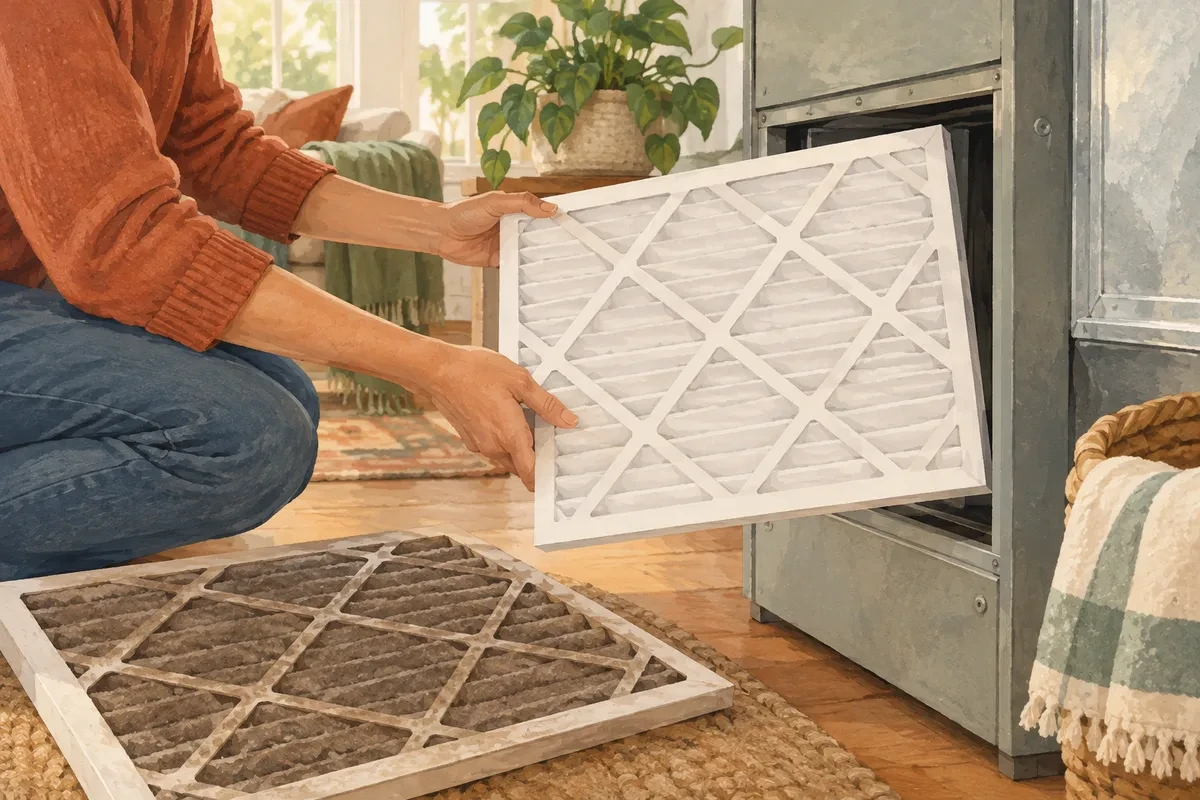
Sometimes life gets busy and the filter slips your mind. A few signs can tip you off that it's time for a change. If you notice more dust settling around your home than usual, if your system seems to be running longer to reach the temperature you set, or if you can actually see the filter looking gray and clogged when you pull it out, those are all good reminders to swap it.
A dirty filter can also contribute to weaker airflow from your vents, which sometimes gets mistaken for a bigger mechanical problem. Before assuming the worst, it's always worth checking the filter first, since it's one of the simplest things to fix yourself.
If you've changed the filter and something still seems off with your airflow, comfort, or energy use, that's a good time to reach out. Our team is happy to answer questions about your specific system and help you figure out what's going on, whether it's related to your filter, your ductwork, or something else entirely.
A Small Habit With a Big Payoff
Changing your air filter isn't glamorous, but it's one of the easiest ways to support your home's comfort and the health of your heating and cooling equipment. A few minutes every month or two can make a noticeable difference in how your system runs and how your home feels.
If you're ever unsure about what filter to use, how often to change it, or whether your system might need a closer look, don't hesitate to call us. We're glad to help Raleigh homeowners keep their systems running the way they should, season after season.
Questions about your own situation? The team at Blue Heron Heating & Air is happy to help — call us at (919) 555-0164 or request an appointment.
This article is for general information only.